Oncor Home




General Inquiries/Service Requests:
contactcenter@oncor.com
(Mon.-Fri., 8 a.m.-6 p.m. Central Time)
(24/7)
General Inquiries/Service Requests:
contactcenter@oncor.com
(Mon.-Fri., 8 a.m.-6 p.m. Central Time)
(24/7)
Fall officially begins on Tuesday, September 22. This day is also known as the fall – or, autumnal – equinox.
On the equinox, day and night are nearly the same length across the globe. As the fall season progresses, the northern hemisphere will begin to tilt further away from the sun. This will, eventually, result in shorter days and longer nights.
However, the time change doesn’t happen until November. Daylight saving time ends at 2:00 a.m. on Sunday, Nov. 1. Clocks will ‘fall back,’ and we’ll get an extra hour of sleep. However, sunrise and sunset will also be an hour earlier.
It will be fall until Dec. 21, when the winter solstice occurs.
The fall season brings the first noticeable drops in temperature as stronger cold fronts begin affecting Texas.
Fall cold fronts also often bring increased rain chances. October is, on average, the second-rainiest month of the year for the Dallas-Fort Worth, Waco, Tyler and Round Rock areas.
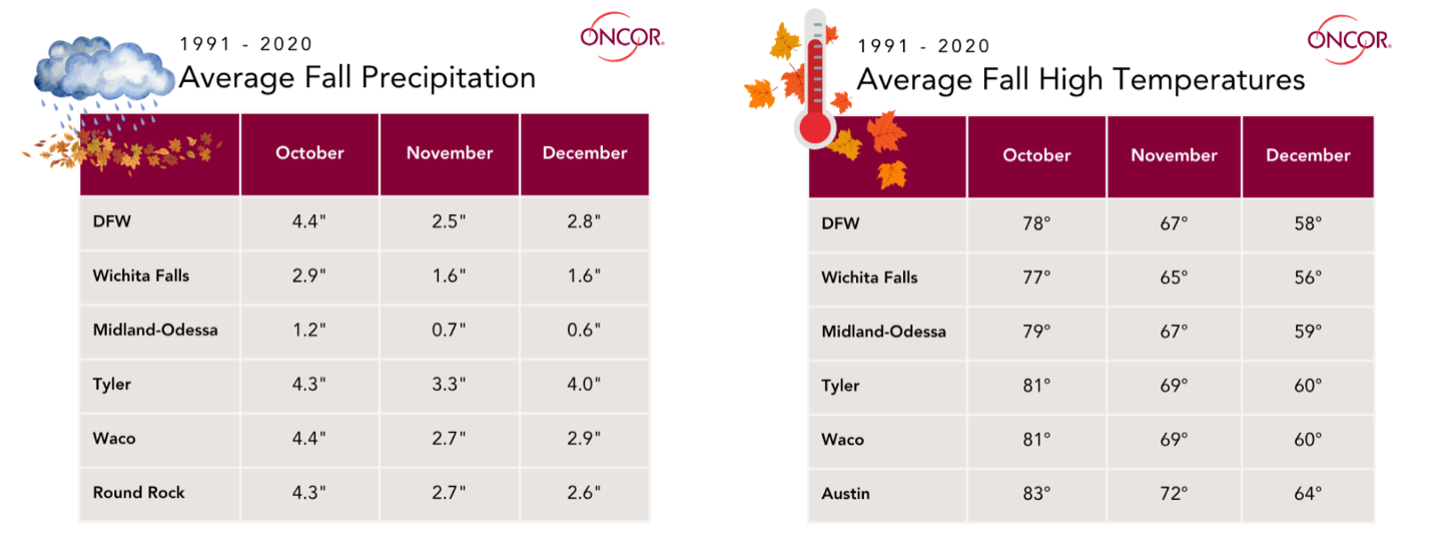
Better rain chances can sometimes mean more severe weather activity. In fact, fall is often called Texas’ second severe weather season, where spring is the first. While it’s impossible to forecast severe weather long-term, this is all the more reason to ensure your family is prepared for severe weather, year-round.
What to Expect
So, what kind of weather is actually expected this fall?
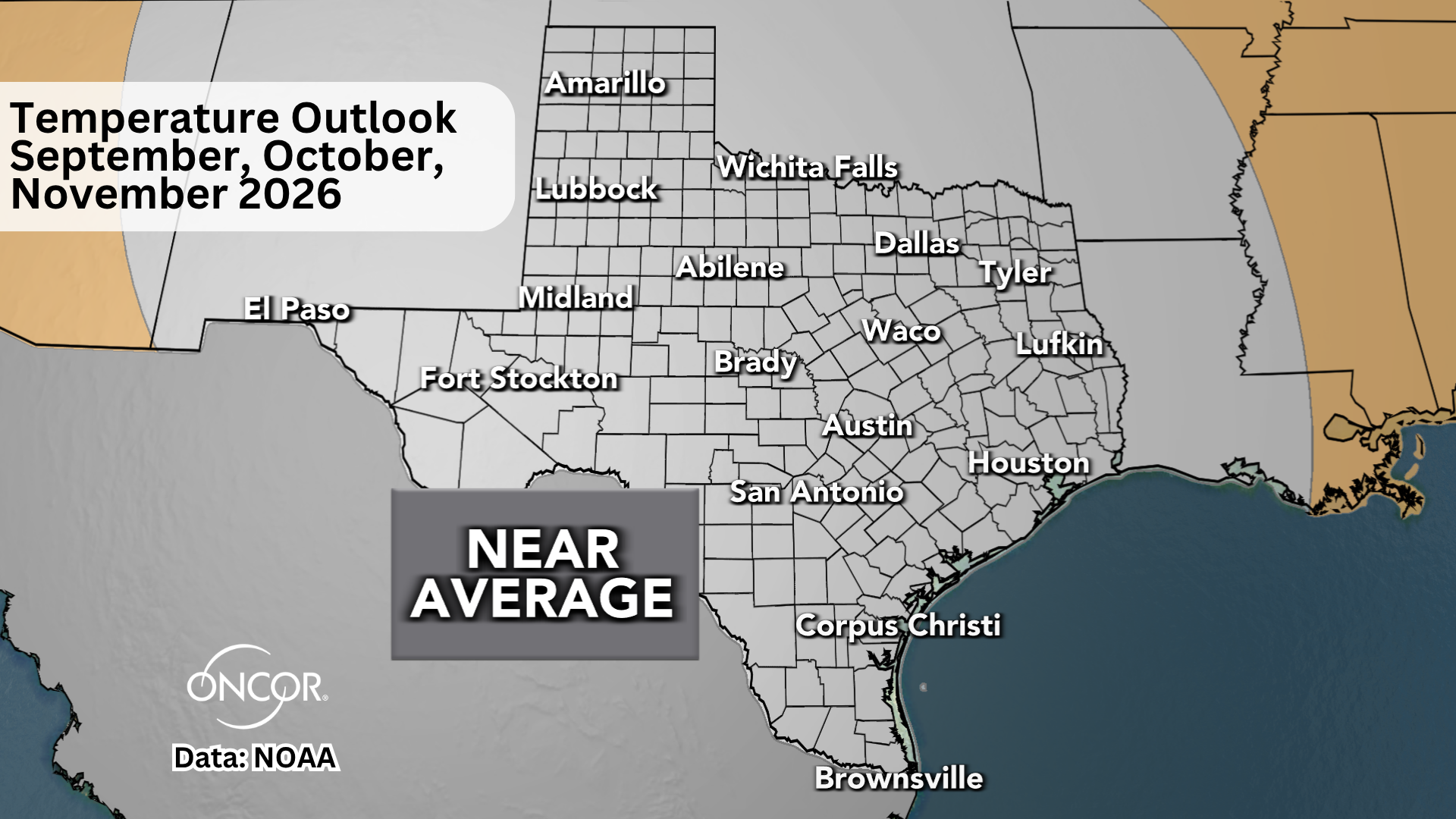
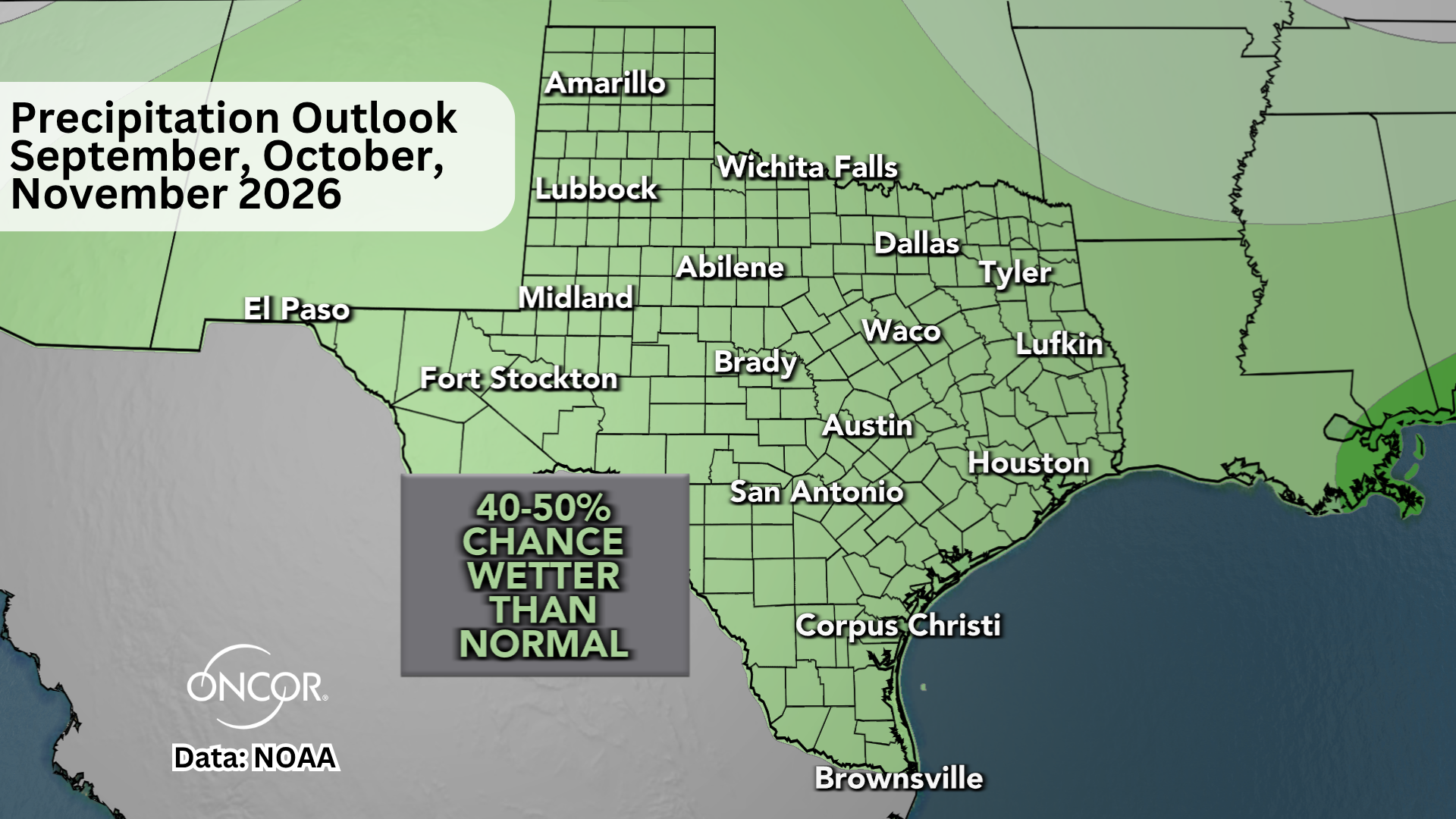
Texas is expected to see near-average temperatures and slightly above-average precipitation.
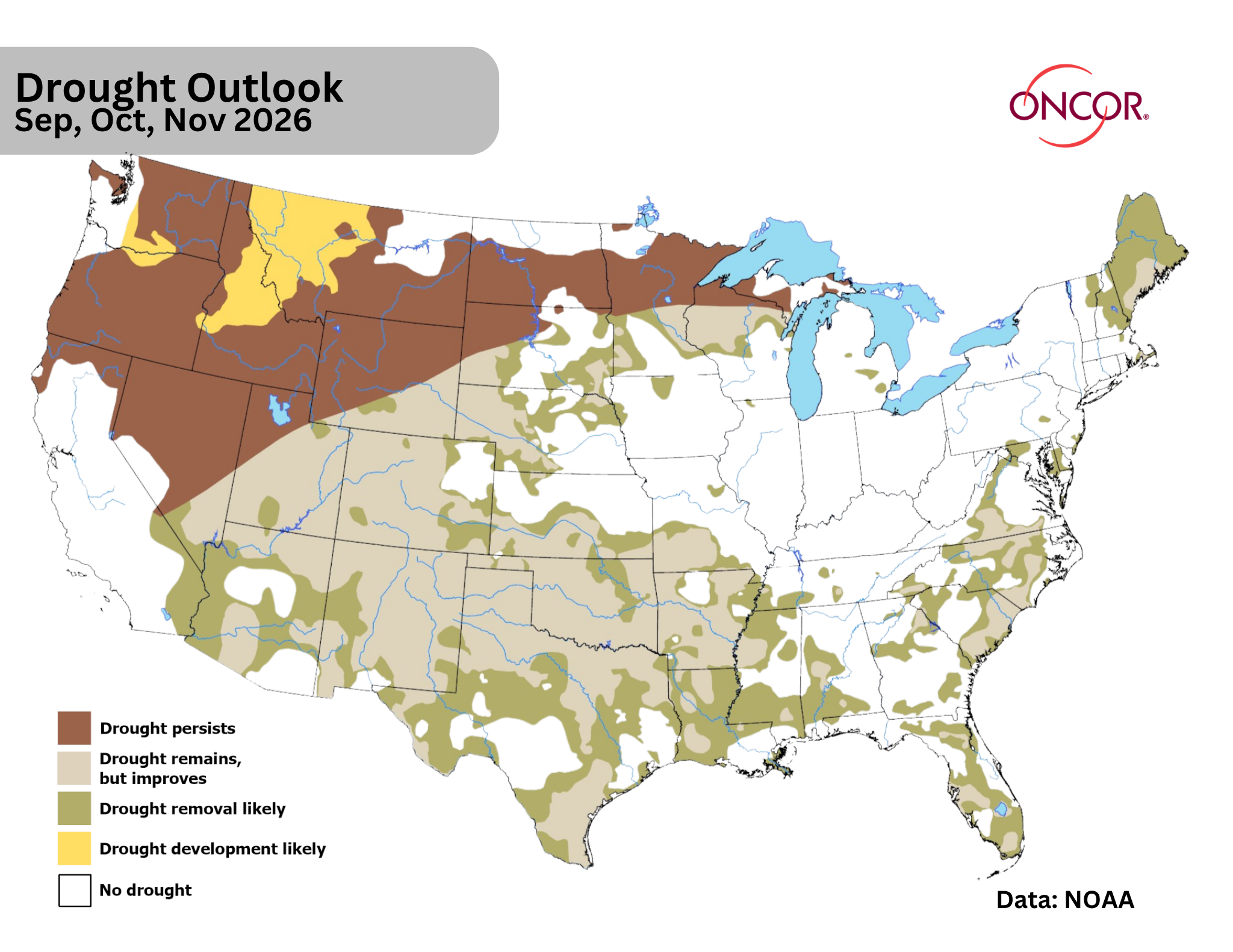
Drought is expected to be removed completely in some areas. In other spots, drought may remain, but should improve.
FAQs
Q: What does the strengthening El Niño mean for our weather?
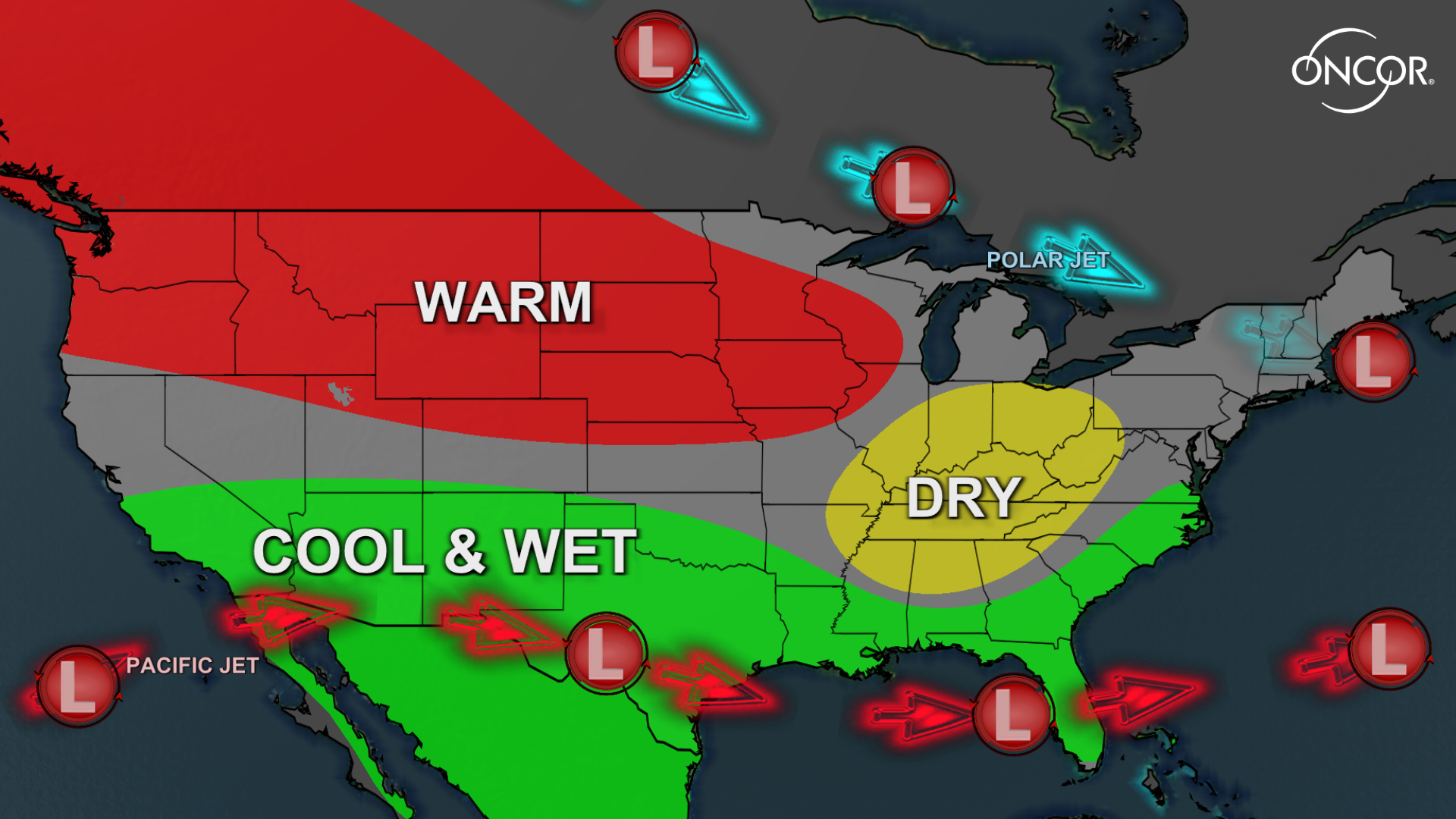
A: El Niño has begun and is expected to become a, “very strong event” this fall and winter. In a typical El Niño weather pattern, a strong Pacific jet stream – or, storm track – brings more frequent low pressure systems across the southern tier of the United States. This often results in more precipitation and cloud cover, as well as lower temperatures. We see this reflected in the outlooks for fall, particularly in terms of precipitation. We should see similar trends this winter.
Q: How do these outlooks work?
A: These seasonal outlooks come from the National Oceanic and Atmospheric Administration’s (NOAA’s) Climate Prediction Center (CPC). They are based on several factors, including the presence of El Niño or La Niña. This is often referred to as ENSO (El Niño/Southern Oscillation).
Q: These outlooks don’t seem very specific. What is their benefit?
A: Seasonal forecasts are meant to be used a guide for general weather trends over several months. They do not offer insights into day-to-day weather, as forecast accuracy beyond about 7-10 days is poor. This means that specific, daily weather forecasts for a span of three months would likely be riddled with error! The benefit of a seasonal forecast is identifying overall trends.
Q: What’s the best way to keep up with my day-to-day weather this season?
A: Find a trusted, local source of weather information and check it daily. A good example is your favorite news station. There’s a good chance they have a mobile app you can use and check frequently. Checking your local forecast can help you make informed decisions in times of inclement or severe weather.
Oncor Stands Ready
Oncor works diligently all year to prepare our equipment and facilities for the changing seasons, including the colder months. We also closely monitor short-term and seasonal weather and forecast data.
We use both in-house meteorologists and a third-party weather monitoring service year-round, allowing us to remain prepared to respond to potential weather impacts that may threaten our service area. Our customers can rest assured Oncor is always ready to respond when weather threatens our service area.
This information is provided by Oncor’s in-house meteorologist, Kaiti Blake. Kaiti is an AMS certified broadcast meteorologist with more than 10 years of forecast & broadcast experience.
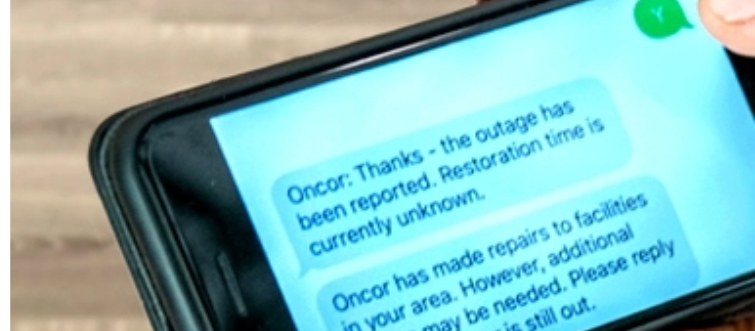
My Oncor Alerts: Monitor outages, get text updates 24/7








.jpg)